Foodie Googlie

Custom Search
Showing posts with label Novel. Show all posts

Tuesday, September 15, 2009

Hugh Cook – The Wordsmith and the Warrior

This article was produced as part of New Zealand Speculative Fiction Week. For more information, go to Pterodaustro Dreams.

Hugh Cook might not be a name instantly recognised by readers of the fantasy genre, but to his legion of dedicated fans across the world, mention of the man and his work inspires a sense of reverence.

Cook remains one of New Zealand’s unsung heroes of fantasy literature, despite his achievements outshining those of many of our more well-known authors. Between 1986 and 1992 Cook released his Chronicles of an Age of Darkness series, a ten-book cycle of stand-alone fantasy novels. Set on a world ruled by bloodthirsty emperors, threatened by swarms of monsters, and blessedly devoid of goblins and elves, the Chronicles capture a history of Cook’s lands and their people in a multitude of voices, spanning continents, and all occurring roughly within the same timeframe of a decade or two. Characters recur across the books, making cameo appearances from one story to the next, weaving a complex web of events that draws the reader through the series, however unrelated each volume may seem to be at a glance.

Cook was among a group of authors who eschewed the traditions of Tolkienesque high fantasy, choosing instead to write about the dark, unsavoury aspects of human nature in the grim harshness of a world bent on crushing the meek. In Cook’s world, orcs are hunted for their blubber and sea dragons are vain creatures who pretend to recite poetry in their sleep before sinking into snoring heaps. Empires are driven to war by syphilitic emperors, who are in turn murdered by warring sons. Heroism is a constant theme, usually as a partner to vanity, folly and ultimately death, and can be summed up in the immortal line, “vaunting their boasts with the blood of their lungs on their lips.”

Suffice to say that Cook rebelled, writing unorthodox fantasy in an unorthodox world. He dismantled old tropes and bent the genre like light through a smoked lens. He replaced the tired theme of good versus evil with one which instead pitted brutality against barbarism, and rarely delivered a clear victor. Cook not only rejected the clichés of the fantasy genre; he subverted them with an almost malicious glee.

To judge Cook’s success by book sales alone would be misleading, but the numbers are certainly impressive at first glance. Altogether, the Chronicles sold around 450,000 copies, and that in itself is reason for celebration for any New Zealand author. The Wizards and the Warriors, together with its US incarnation, Wizard War, sold over 160,000 copies, a phenomenal sales record for any fantasy author.
Unfortunately, as the Chronicles became less conventional and more obtuse, sales began to decline. This was compounded by the decision made by bookselling chain W.H. Smith to drop Cook’s books from their shelves when sales slowed, which inevitably led to an even steeper fall. Despite a rebounding of style and content in the last three books of the series towards more action-based storytelling, Cook had largely lost the means to supply to his mainstream audience, with sales for these three books falling to between 7,000 and 10,000 copies each. I bought all my copies of Hugh’s books in my local Whitcoulls here in New Zealand, where his books enjoyed pride of place on their shelves with every release. But if the books were not on the shelves overseas, then Cook’s fans had little chance of finding them.

Cook’s prose drew heavily on the landscape, places and mythology of New Zealand, from the legendary Taniwha of Quilth, to the Ngati Moana, to a prison called Maremoremo (after Paremoremo in Auckland). Our native flora and fauna often made cameo appearances in wild locales, including weka, kauri and rimu, to name but a few – all of this well over a decade before Peter Jackson delivered our country up to the world as Middle Earth. Cook refused to suffer from cultural cringe; he embraced our country’s uniqueness and used it to flavour his own inimitable world and style.

China Mieville, author of Perdido Street Station, sums Cook up nicely; “Hugh Cook was one of the most inventive, witty, unflinching, serious, humane and criminally underrated writers in imaginative fiction. Or anywhere.” It remains a shame that so few New Zealanders know that Cook was a Kiwi writer, but there is a good reason for this: Hugh Cook may have lived in New Zealand and written in New Zealand, but I suspect he saw the same tired faults with our nationalistic model of publishing and author recognition as he saw in the failure of the fantasy genre to redefine itself. Accordingly, after publishing Plague Summer here in 1980, he bypassed the New Zealand publishing model and went instead to the London market, where he secured publishing deals almost simultaneously for both his science fiction novel The Shift (Jonathan Cape, 1986) and the first volume in the Chronicles series, The Wizards and the Warriors (Corgi,1986).
What separated Cook from so many of his contemporaries was his ability to alter his prose style from book to book, while he never lost his unique authorial voice. Two of the Chronicles, The Wishstone and the Wonderworkers and The Wazir and the Witch, take the form of actual recorded histories, thick with the idiosyncrasies of both the imaginary scribe and subsequent editors, and are thus peppered with redactions and long, apparently unrelated diatribes. These books are full of acerbic dark wit and bleak philosophies, and represent, in some ways, Cook’s ultimate success at writing fantasy that transcended the sword and sorcery models of the genre. For all their apparently random digressions beyond the story, these two books might be seen as the pinnacle of Cook’s genius, for there is a depth to these tales that no amount of Feistian swashbuckling or Eddingsesque adventuring could rival. Some readers even suggested that ‘Hugh Cook’ was not one writer but many, a collaboration of individuals writing in isolation with a single grand design in mind. But Hugh Cook was just one man, a prolific author and poet, whose storytelling skills ascended beyond the formulaic norm into something infinitely more enduring.

Ironically it was these two books, with their challenging diversions into philosophy and metaphysics, that seemed to undermine Cook’s mainstream success. Book sales for these two volumes showed a steep slide from his earlier highs, and may have contributed to the W.H. Smith decision and its consequences for Cook’s publishing career. Cook did with fantasy what hard science fiction does to that broader genre, by delving into in-depth ruminations of the unknown and fantastical in the body of his storytelling. Cook teased apart the nature of magic and the supernatural as demi-scientific concepts, as well as exploring the brutal underside of human nature as represented by its practice in politics and warfare – stark metaphors for the real world, despite being dished up in the barbaric soup of a fantasy setting. Apparently, booksellers suspected that works of this complexity and wisdom would not be appreciated by fans of the tales of blood-soaked armies, pirates, and torturers that had preceded them. This was truly a pity.

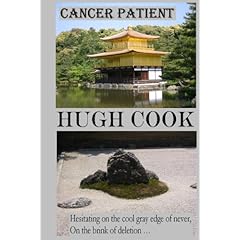
Cook’s epic plan for a sixty book series was accordingly cut short, and after publishing the brilliant conclusion to the Chronicles, The Witchlord and the Weaponmaster, he went on to champion print-on-demand technology and electronic formats, constantly moving into newer and stranger worlds with his writing. He was among the first authors to publish works through Lulu.com with the Oceans of Light trilogy and later, Cancer Patient. Even so, the Chronicles remain Cook’s legacy, and copies of these volumes continue to fetch outlandish prices in second-hand book markets around the world (my own collection must be worth a small fortune, according to Amazon – but it is most certainly not for sale).

Cook was diagnosed with Non-Hodgkins Lymphoma in 2005. He endured months of chemotherapy and radiation treatment in Auckland, which briefly sent the cancer into remission. During this ordeal he wrote Cancer Patient, a collection of musings, poetry and recollections which document his struggle with the disease and what he learned about life and the human condition in the process.This book is available for free as an online e-book or as a download from zenvirus.com, one of Hugh’s many websites. Unfortunately in 2007 the cancer returned, and Cook passed away on November 8th, 2008, after bravely battling the disease for so many years. It is a testament to the scope of his fanbase that the obituary I wrote for him, which was published in the New Zealand Herald and which I posted to my blog in December last year, remains one of my most frequently visited pages.

Ultimately, Cook was both Wordsmith and Warrior. Poems, stories and characters were his tools and his weapons. He wrote with a passion, producing fiction at a prolific rate, and the English language would be greatly enriched if all the words and terms he had coined in his oeuvre were to be introduced into common parlance. He fought to find new ways forward in the publishing world, exploiting technologies that are only now starting to establish their true place in the electronic market. He maintained his integrity as an author to the very end, determined to always share the stories he had to tell, and not those that others wanted him to tell. At the end, he fought an unseen enemy – fought it and beat it, if only for a short time. Even in this, he had a story to tell, one that may not have been able to completely defeat that insidious foe, but which may yet bring comfort to others who face those same demons at some stage.

For those of you interested in reading Hugh Cook’s work, samples and full-length copies of some of his books can be found at zenvirus.com. Also, keep an eye out for a reissue of The Walrus and the Warwolf, due for release in 2010 by Piazo Publishing, with an introduction penned by China Mieville.
Walrus is recognised by Hugh’s fans as his finest hour, and well worth a read by any lover of epic fantasy. To quote Mieville again, “To honour the memory of this wonderful and generous-spirited writer and man, those - too bloody few - of us who know his work should do all we can to bring it to the world's attention.

Hugh Walter Gilbert Cook (1956-2008): Wordsmith; Warrior; New Zealander.

Man’s first death is the random potential
Of aeons before conception,
And the surf, merging life with form,
The surf is creation and rebirth.

(Cicada Sun, Landfall #118, 1976)

I would like to thank Colin Smythe, China Mieville, and the Cook family for their kind assistance in preparing this article.

Thursday, May 21, 2009

Podcast Novel Review: "Nocturnal" by Scott Sigler

In the brave new world of the podcast novel, it takes something special to be called a classic. Nocturnal by Scott Sigler is just such a rare creature.
Scott Sigler was among a very small group of writers who literally pioneered the Podcast Novel format, releasing his first book, Earthcore, in 2005. At the end of that podcast there is a very interesting Q&A with Mark Jeffrey, which provides a snapshot of both how small the audiobook market was at the time, and how Sigler envisioned it growing into the creature it has become - and that creature continues to grow.

Nocturnal is Sigler's third podcast novel, and it is a masterpiece of action horror. What starts out as a police procedural detective novel with a paranormal element quickly morphs into a gruesome and electrifying monster story, and from there into an action rollercoaster that would put John Woo to shame.

You'll forgive me if I slip, but I tend to recall Nocturnal as a movie rather than a book. The action and the imagery have seared into my skull, all chiascuro shadows and arcing blood lit by guttering streetlights and gunfire.

Sigler's dark alternate San Francisco is a place of fear and tension, haunted by unseen monsters, remorseless gangsters, ruthless vigilantes, corrupt cops, and a psychotic schoolboy with a god complex. Through this morass of murder two cops face the challenge of trying to solve the murders that have started to plague the city, only to find a conspiracy that even the SFPD doesn't want them to uncover.

This stuff is addictive. I personally neglected family, friends and more important things like writing my own novel to listen to this book. Sigler gets his teeth into your soft, tender flesh and shakes, not letting you go until he's wrenched you through the increasingly brutal and bloody story of the Nocturnals. And he pulls no punches whatsoever. Where Hollywood would turn away or save the day, Sigler just continues to rip shreds, and it is fantastic.

Not for the light of heart, I must emphasise. Nocturnal is R18 on every scale, for language, violence, torture, and even on a conceptual level. Yes, I squirmed more than once. But the payoff is so worthwhile, and nothing in this book is wasted. Every act of brutality, every murder, every fight, every explosion serves a valid and crucial purpose to the story. At the same time, Sigler can do subtext and complexity as well as he does action. I do not understand how Dan Brown sells more books than this guy. Brown is nothing next to Sigler.

Sigler's writing is also a pleasure to listen to, his dialogue sharp and his prose as witty as it is tight. He carries a vast cast of characters, voicing each with confidence and consistency. As usual, I cringe a little when a grown man puts on a woman's voice, but if I could do any better, I'd have some grounds to complain. I can't, so good on you Scott for giving it your all.

The audio production is clean and professional, relying almost entirely on Sigler's voice to carry the story. I can only recall one location that was augmented by a creepy harpsichord music track, and that really stood out for its oddity. As I've said, Sigler is a clever writer and a powerful performer, and thus requires little in the way of bells and whistles to bolster his efforts.

Again, for a free work, this is just brilliant. It is said that Sigler doesn't have fans; he has junkies. I just finished Earthcore today, and I still have four podcasts by Sigler to listen to. The future is bright.

5 Stars.

Nocturnal is an instant classic. Available as a free podcast download through iTunes and Podiobooks. Swing by Sigler's site for more info on this modern literary maestro, one of the true pioneers and energetic advocates of this great artform.

Thursday, May 14, 2009

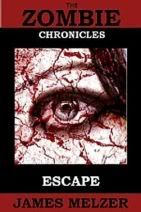
Podcast Novel Review: "The Zombie Chronicles" by James Melzer

Here's a podcast you can really get your teeth into.

James Melzer
is one of a new breed of writers who are finding success by eschewing the traditional methods of shopping a manuscript to agents and editors, and are instead puffing out their lungs, warming up their vocal chords, and releasing their works into the wild - in the form of free podcast downloads.

As you know, I've been going on about this for a while now. As anyone who follows me on Twitter will know, I'm pretty much obsessed with podcast novels at the moment.The Zombie Chronicles - Book 1: Escape has continued to feed this addiction. This is storytelling with bite.

I had my reservations, as I greatly fear all the cliches that are associated with zombies. Zombies have gone so far into the laughable in the past twenty-odd years that it's a he!! of a job trying to make them scary again. Somehow, Melzer has written a zombie book that at once encapsulates all those worn-out tropes and injects the zombie genre with a new lease on life.

(Ah, will the puns never end?)

From the first chapter, I was grabbed by the freshness of Melzer's writing, his wry wit and the way he pulls a middle finger at all the stale baggage that zombies bring with them. Despite the title, this is no 28 Days Later. Without wanting to bring any spoilers to the table, I think it's safe to say that Melzer has single-handedly reinvented the zombie genre, while never abandoning everything we love about zombie stories - decaying flesh, the lust for human meat, brains exploding under well-aimed headshots.

TZC brings unexpected twist after twist, none of which have any place in the story you think you're listening to. But Melzer pulls it off with style, wit and lots of disintegrating sinew. I almost panicked when iTunes wouldn't give me the last chapter. Desperate measures were taken to hear the last part of this book, I guarantee you.

If you're into zombies even a little bit, you must listen to this podcast - or buy the book, when it comes out later this year (full disclosure - I get nothing from promoting any of the podcasts I review. I just dig that these guys and girls are so cool about it). If you like a good action story, or anything with a twist, this is also brilliant.

The audio quality is faultless. Melzer pulls off his voices without any problem, and has chosen not to clutter up the soundscape with effects. I think that if a podcaster/audio producer has the means and the ear to do good music and effects, and it doesn't cut drastically into their available timeframes, and that if adding M&E really fleshes out the world, then they ought to do so. But if a writer embarking on the huge task of recording a podcast feels they don't have the means or the skills to do this well, I thank them for not ruining an otherwise good production with a subpar effects track. It's nice to just appreciate the writing and the performance for what they are.

(To those podcasters who do put in the effort and do it well, keep up the good work. I love it all!)

I highly enjoyed this podcast. What it may have lacked in substance, it made up for in plot twists, gunfights, and exploding heads. Having said that, I felt close enough to all the characters to really want to root for them, although I was never really sure if I could trust anyone at all. Fantastic stuff.

TZC gets a solid 4 1/2 Stars out of 5 from me.

Coming Up:
Reviewing the Classics. I've recently finished Scott Sigler's Nocturnal and Seventh Son: Descent by JC Hutchins. Both will get a review here, as I educate myself on some of the seminal works of this emerging artform.

Past Reviews:
Hoad's Grim by Jack Kincaid - 5 Stars
Eden by Phil Rossi - 5 Stars
Jack Wakes Up by Seth Harwood - 3 1/2 Stars
Crescent by Phil Rossi - 4 Stars
DarkAge by Kirk Warrington - 2 Stars

Thursday, May 7, 2009

Podcast Novel Review: "Jack Wakes Up" by Seth Harwood

To celebrate Seth Harwood's novel Jack Wakes Up being released into bookstores across the USA this week, I took it upon myself to listen to the entire podcast over the past two days and throw out my thoughts on it.
Jack Wakes Up is a bit of a step away from my usual cup of tea, being a crime novel and not in the slightest bit fantasy, horror, or science fiction. But it stood out to me, as crime fiction goes, in that the protagonist was not a cop or an ex-marine, but rather a washed-up actor.

Jack Palms has been on the wagon after his drug- and alcohol-fueled fall from grace some years earlier, which saw his marriage fall apart under the watching eyes of the public and the media. He's now cleaned himself up but is completely broke. A dodgy character from his past life entices him into doing one last big drug deal to set himself up for a while and make a new start.

As Jack gets drawn deeper into San Francisco's shady underworld, however, things quickly go from bad to worse.

Jack Wakes Up would fall somewhere between Lock Stock and Two Smoking Barrels and 2 Fast 2 Furious, were it to have been a film. There are drug deals, murders, gun fights, car chases, betrayals, and strip bars - everything you expect from a high-octane, fast-paced action story.

This was fun to listen to. In the world of action storytelling, JWU was an invigorating tale, a cracking good yarn with plenty of good laughs thrown in. If my impression is that this was perhaps a bit lighter than Harwood intended, it's only because last night I also finished listening to Scott Sigler's Nocturnal, which completely blew me away (and will be reviewed very shortly, I promise). By comparison, JWU was good relief.

The audio production was clean and uncluttered. Harwood obviously made a choice not to use any sound effects (or if he did, they were so well done that I didn't even notice them), and relied on his own delivery to carry the pace of the story. There is no music or atmos in the soundtrack apart from chapter breaks, but I don't think the production suffered for this at all. The writing itself is tidy and precise, and Harwood's diction is mostly faultless (apart from the occasional stumble which hasn't been edited out), so following the story is never an issue.

I played this podcast through my computer speakers in a busy workshop, and was very rarely either a) unclear as to what was going on, or b) suddenly aware that I had lost the thread. I was kept engaged throughout the reading, even with distractions, and always felt like I knew what was going on and where the characters were. This is a testament to Harwood's writing and delivery, since this podcast is really just the author reading his own story, with all the passion he can muster.

Nice one.

Overall I rate Jack Wakes Up at 3 1/2 Stars.

Recommended to anyone who likes a good gangster or crime story, or a bit of action. Jack Wakes Up is complete at 19 Chapters, plus a Q&A with Seventh Son author JC Hutchins, which is both entertaining and informative.

You can listen to the first chapter here. The rest of the podcast can be found at Harwood's website, totally free. The book is also available in US bookstores and online.

While we're talking about Seth Harwood, he has posted a really helpful video about how to go about recording a podcast, which I also recommend for the three minutes it'll take you, if that sounds like something you might be thinking about.

Jack Wakes Up is available from Amazon.com, and can be found in bookstores across the USA.

Wednesday, September 17, 2008

Urban Driftwood and other Wordy Stuff

Time for another Urban Driftwood update. Read here and here for earlier posts on this most exciting of topics.

The first four copies ever arrived last weekend, and this afternoon I dropped off Steve's copy to him for a look. I'm meeting Jane on Saturday to give her her copy, right after we've been to the market. And while our dinner date with Morgue seems to keep morphing between dates and times I'm sure we will touch base very soon. I'm giving the above-named artists a chance to look over the book and give me any feedback they might feel necessary before we open it up to the public. My deadline is September 30th, which means that on Wednesday October 1st Urban Driftwood will be all go. That's how quick the Internet can be, folks. For a project whose title I conceived in 1994 and which I began developing in 1999, October 1 2008 is a significant date.

Are you as excited as I am?

Anyway, a link will be posted as soon as Urban goes live.

In other writing news, I reached Chapter 38 of 43 in the redraft of my novel today, page 1035 in fact, which means that I must be almost done. I'll be happier when I get to write that I've just completed Chapter 43, and that I'm done, done. That will be a fine day indeed.

I'd also like to plug a VERY FUNNY book, written by a kiwi chap whom I've never met, but is apparently quite famous. His book, The Bible II:Rick the Chosen One, is a hilarious, mildly ribald piece of off-the-wall humour. Clownwings sums it up like this:

If you like Terry Pratchett's Discworld series, you'll love this book. Not really informative, not much of it even makes sense, but very *expletive* funny. If you want to laugh, without knowing why, this book is for you.
RTCO can be found at the Kiwiwriters' Storefront, where Urban Driftwood will be available in two weeks or so.

BTW, at the time of publication the link to "Clownwings" above actually takes you a virtually blank page. This person, whom I also don't know, obviously joined Lulu but has not set up a storefront. We may or may not learn more about this mysterious "Clownwings" in the future. And Clownwings, if you're reading: Who the h#@k are you?

Just cos I'm nosy. ;-)

Tuesday, July 22, 2008

Halfway Points

So I rapidly approach the last halfway point in the revision process.

The first halfway point was completing the revision of Volume 1 of my novel, where I could physically put aside the first printed and bound "half". That was an achievement in itself.

But it wasn't really halfway, as Volume 2 has 3 chapters more than Volume 1, so last night I passed the second halfway mark by revising to the end of Chapter 22, effectively having revised more than half of the novel's 43 Chapters.

Except, as I'm sure sure you'll appreciate, this was not quite the true halfway point, as I had not yet revised more than half of the novel's 1230 pages. Tonight's effort, which saw a whole Chapter redrafted (there's nothing quite like knocking off a whole Chapter in a night to get the blood pumping), brings me in sight of that goal by bringing me up to page 605.

So yes, each of these is a halfway point, and each one is a goal that must be set and overcome to find success at the end of the road. I figure that whatever arbitrary measures I put in place to attend to the monumental task at hand, any that keep me feeling like this is not a job bigger than I can actually complete has to be good. On the plus side, 600 pages in and the quality of the writing has improved over the course of the second draft, which has meant less actual rewriting to be done by me anyway. So maybe I actually passed halfway some time ago, and now I'm on the downhill run. I sure hope so.

In other halfway news, my Mum has corrected my halfway activities as regards her Corned Beef, which apparently is nothing like her Corned Beef at all. Also on the note of my Mum's cooking, I made the Tangy Sweet Curry which has been raised here in the Slow Cooker on Monday, letting it cook while I was at work. I prepped it on Sunday night, and to keep things interesting (and because I was only cooking for me) I added a bit more Curry Powder than safety guidelines recommend. Now, a night's marination and a day's very slow cooking has a way of really bringing out the best in a curry, even a mild one. Diners are advised to bring extra water, perhaps by Elephant if possible. As I have not mastered this recipe for the slow cooker, I won't post it here. But the leftovers that I had tonight showed that with a night in the fridge, even a killer curry can show a bit of maturity. It was served with a panful of crunchy cabbage cooked in butter and salt. I'll be looking for ways to make cabbage interesting too, as its the only vege I have in the fridge until Saturday. Last weekend's attempts to get to the market were a washout - literally. I didn't have a big enough boat to bring the veges home.

And for the record, here is the link to the Beef Ragu I mentioned briefly yesterday. Go National Radio!